


KEY SUMMARY
Maa sirf ghar nahi sambhalti – woh financial habits bhi shape karti hai. From saving ₹10 in a gullak to teaching “zaroorat vs shauk”, mothers quietly build a child’s money mindset. This blog explores how mothers shape financial habits of children, with real examples, data, and insights.
👩👧 How Mothers Shape Financial Habits of Children
“Paise ped pe nahi ugte.”
Har Indian ghar mein yeh line kisi na kisi Maa ne zaroor boli hogi.
Aur shayad tab irritate kar deta tha
Par aaj samajh aata hai – yeh sirf dialogue nahi tha, financial education ka first lesson tha.
India mein financial literacy kaafi low hai.
SEBI survey ke according, sirf ~27% Indians are financially literate.
Toh phir baaki log financial decisions kaise seekhte hain?
👉 Ghar se.
👉 Maa se.
Mothers often:
- Manage Household budget
- Expenses prioritise karti hain
- Savings discipline maintain karti hain
Child observe karta hai aur sikhta hai.
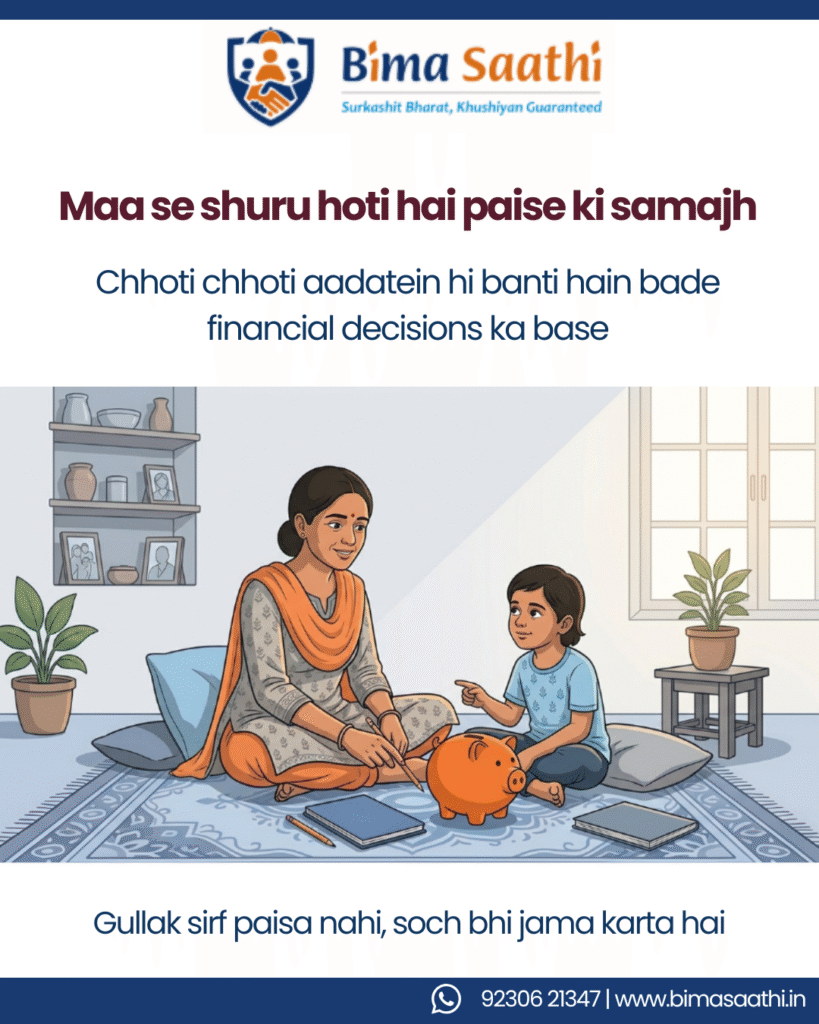
Daily Habits That Shape Lifelong Money Mindset
Maa financial planning routine se sikhati hai.
Common habits:
- Sabzi wale se bargaining
- “Offer mein le lo, sasta padega”
- “Iski zaroorat hai ya bas mann kar raha hai?”
These small actions teach:
- Value of money
- Needs vs wants
- Smart spending
The Power of Examples: From Piggy Banks to Portfolio Management
1. The “Dabba” System: The Original Emergency Fund
Almost every Indian child has seen their mother pull out cash from a hidden cupboard during a crisis. This isn’t just “hiding money”; it is a masterclass in Liquidity Management. It teaches children that no matter how well life is going, a portion of the income must be kept separate and untouched for the “unseen.”
2. The Grocery Negotiation: Teaching Value over Price
When a mother compares the price of pulses at two different shops or waits for a seasonal sale to buy school uniforms, she is teaching Opportunity Cost. She shows the child that saving 50 rupees today means having 50 rupees for a treat or a book tomorrow.
3. The “Priority” Conversation
“We aren’t buying this today because we need to save for your sister’s higher education.” By vocalizing these choices, mothers help children understand Goal-Based Investing. They learn that money is a tool to achieve life milestones, not just a medium for consumption.

The Problem: The Modern “Entitlement” Trap
In today’s digital age, the “One-Click Buy” culture is eroding the lessons mothers used to teach.
- Instant Gratification: Apps deliver everything in 10 minutes, making the concept of “waiting and saving” feel obsolete to children.
- Invisible Money: With UPI and credit cards, children don’t see physical cash leaving the wallet. Money feels “infinite” and abstract.
- Peer Pressure: Social media creates a “lifestyle competition” that can overwhelm the sensible advice given at home.
If mothers do not consciously counter these digital trends with active financial storytelling, children may grow up with high earning potential but zero “financial character,” leading to debt traps early in their careers.
🏠 The Invisible Budget Manager
Agar aap observe karo,
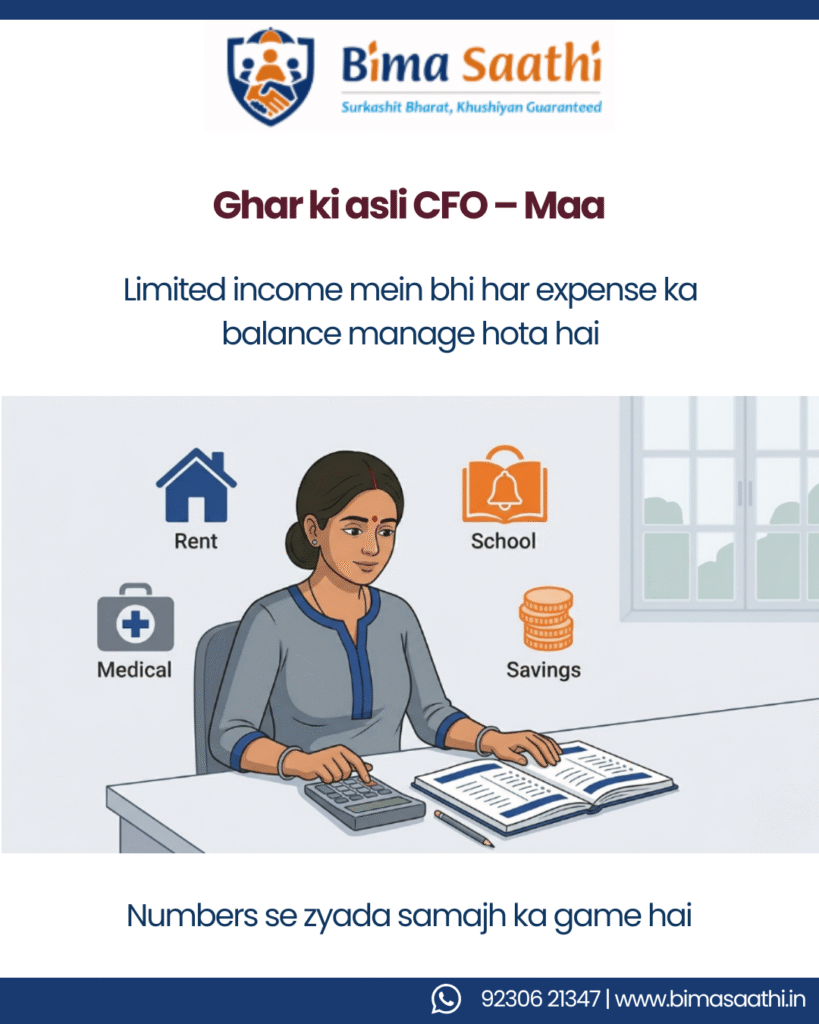
Maa ghar ka CFO hoti hai without title.
Example:
Family income: ₹40,000/month
- Rent
- School fees
- Groceries
- Medical
- Savings
Aur phir bhi ghar smoothly chal raha hota hai.
Kaise?
👉 Prioritisation
👉 Planning
👉 Sacrifice
Often mothers:
- Apni needs delay karti hain
- Family ko pehle rakhti hain
Yeh lesson bachche absorb karte hain
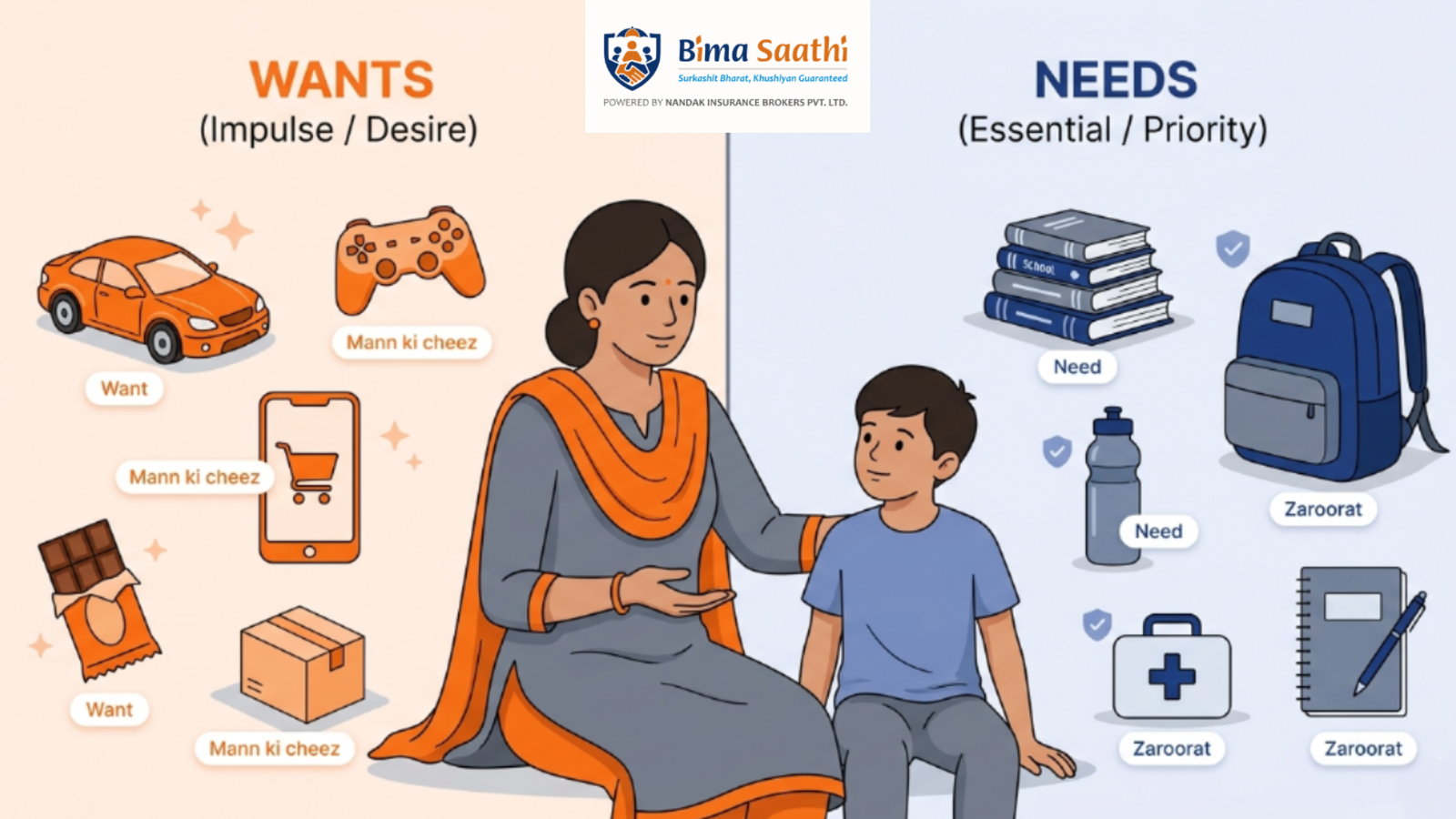
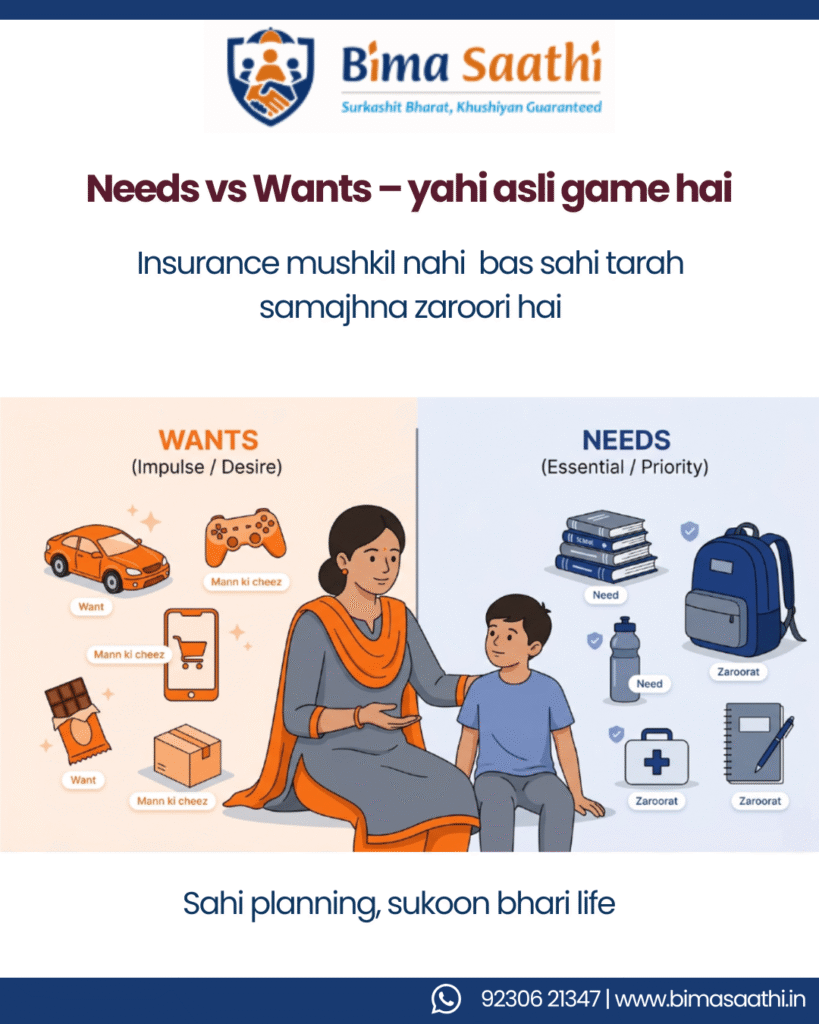
Needs vs Wants: Sabse Powerful Lesson
Ek simple situation:
Child: “Mujhe new toy chahiye.”
Maa: “Pehle yeh batao – zaroorat hai ya bas dosto ko dikhane ke liye chaiye?”
Bas. Yeh moment powerful hai.
Because:
- Child learns to pause
- Emotional spending control hota hai
- Decision-making improve hoti hai
Aaj ke time mein:
- BNPL (Buy Now Pay Later)
- Credit cards
- Easy EMI
Impulse spending aur easy ho gaya hai.
RBI data suggest karta hai ki
👉 India mein unsecured credit usage rapidly grow ho raha hai.
Isliye yeh lesson aur important ho gaya hai.
Risk Awareness: Protection Ka Real Meaning
Indian mothers risk ko differently samajhti hain.
Unka focus hota hai:
- “Kal kya hoga?”
- “Emergency aaye toh?”
Isliye:
- Gold savings
- Cash reserves
- Informal safety nets
Lekin modern world mein yeh enough nahi hai.
India mein:
👉 ~70% log adequate insurance cover ke bina hain
Yeh gap dangerous hai.
Yahan POSP ka role aata hai:
👉 Awareness + guidance
Because:
“Maa protection samajhti hai par system samjhana zaroori hai.”
Financial Behaviour Is Emotional, Not Just Logical
Research yeh dikhata hai ki:
👉 Money decisions emotional hote hain, logical nahi
Aur emotions kaha se aate hain?
👉 Childhood conditioning
Agar ghar mein:
- Fear-based spending hai → child risk-averse banega
- Balanced approach hai → confident decision maker banega
Mothers emotional anchors hoti hain.
Unka tone:
- Calm
- Practical
- Grounded
Yeh directly impact karta hai:
👉 Financial confidence
“Paise ka relation numbers se kam upbringing se zyada hota hai.”
Solutions: How Mothers Can Modernize Financial Parenting
- Talk About the “Why” Behind Insurance:
Don’t just pay the premium in secret. Tell your teenager: “We pay for this Health Insurance so that if anyone gets sick, our dreams for your college don’t have to be sold to pay the hospital bill.” Connect protection to dreams. - The 3-Jar Method for Kids:
For younger children, use three transparent jars: Save, Spend, and Give.- Save: For long-term goals (like a bicycle).
- Spend: For immediate treats.
- Give: To teach empathy and the social value of money.
- Gamify the Budget:
Give your child a fixed budget for a weekend outing. Let them decide between a movie or a fancy dinner. If they choose both and exceed the budget, do not bail them out. Let them experience the “crunch”—it’s better they learn it with 500 rupees now than with 5 lakhs later. - Introduce the “Safety Net” Concept Early:
Explain that insurance is like an umbrella. You don’t want it to rain, but you’re glad you have the umbrella when it does. This removes the “taboo” around discussing illness or death and replaces it with the empowerment of being prepared.
📚 Learn Before You Guide
👉 Financial Planning for Young Parents
https://bimasaathi.in/financial-planning-for-young-parents-in-india-securing-your-childs-dreams-from-day-one/
👉 Financial Shield vs Goals
https://bimasaathi.in/har-family-ko-financial-goals-nahi-financial-shield-ki-zaroorat-hoti-hai/
👉 Income Protection
https://bimasaathi.in/income-protection-the-foundation-of-financial-stability/
Yeh articles help karenge:
- Protection ka importance samajhne mein
- Real-life financial risks dekhne mein
“Samjha hua insaan hi sahi decision leta hai.”
Final Takeaway: Financial Education Ghar Se Shuru Hoti Hai
School sikhata hai:
- Math
- Science
Par life sikhati hai:
- Money
- Responsibility
- Security
Aaj agar aap financially aware ho,
toh kahin na kahin usmein Maa ka role zaroor hai.
“Aapka bank balance baad mein banta hai pehle mindset banta hai.”
Bima Saathi Ke Saath Financial Awareness Aage Badhaayein
Agar aap:
- Financial awareness build karna chahte hain
- POSP opportunity explore karna chahte hain
- Logon ko sahi guidance dena chahte hain
BIMA SAATHI aapke saath hai
📞 Call / WhatsApp: +91 92306 21347
📧 Email: support@bimasaathi.in
🌐 Website: https://bimasaathi.in/
Decision aapka hoga, Saath hum denge.
FAQs
1. How do mothers shape financial habits of children?
Mothers shape financial habits through daily money decisions, budgeting, and teaching needs vs wants.
2. Why are mothers important in financial education in India?
Mothers manage household finances and influence children’s money mindset from an early age.
3. At what age do children learn money habits?
Children start forming money habits as early as age 7 through observation and experience.
4. Can financial habits learned in childhood impact adult life?
Yes, early financial habits strongly influence spending, saving, and decision-making in adulthood.
5. How can POSPs use this insight in financial selling?
POSPs can engage mothers respectfully, simplify explanations, and focus on family security to build trust.

Leave A Comment