


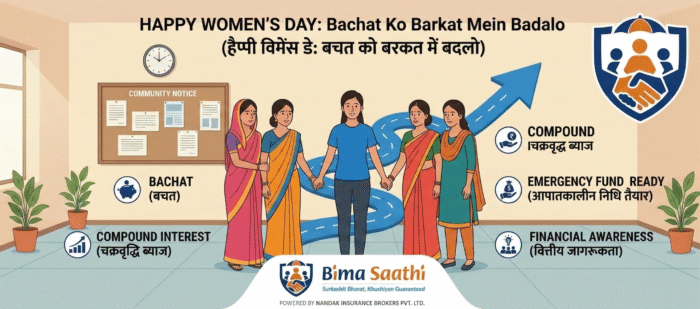
Key SummaryIn many Indian homes, women already manage day-to-day expenses, but when they truly understand money, something powerful happens. Families start planning better. Savings become consistent, risks are understood, and long-term goals become clearer. From education planning to emergency preparedness, financially aware women strengthen households and communities. In today’s India, empowering women with financial knowledge is not just progress, it is one of the smartest ways to build financially secure families. |
Money Management Often Begins in the Kitchen, Not the Boardroom
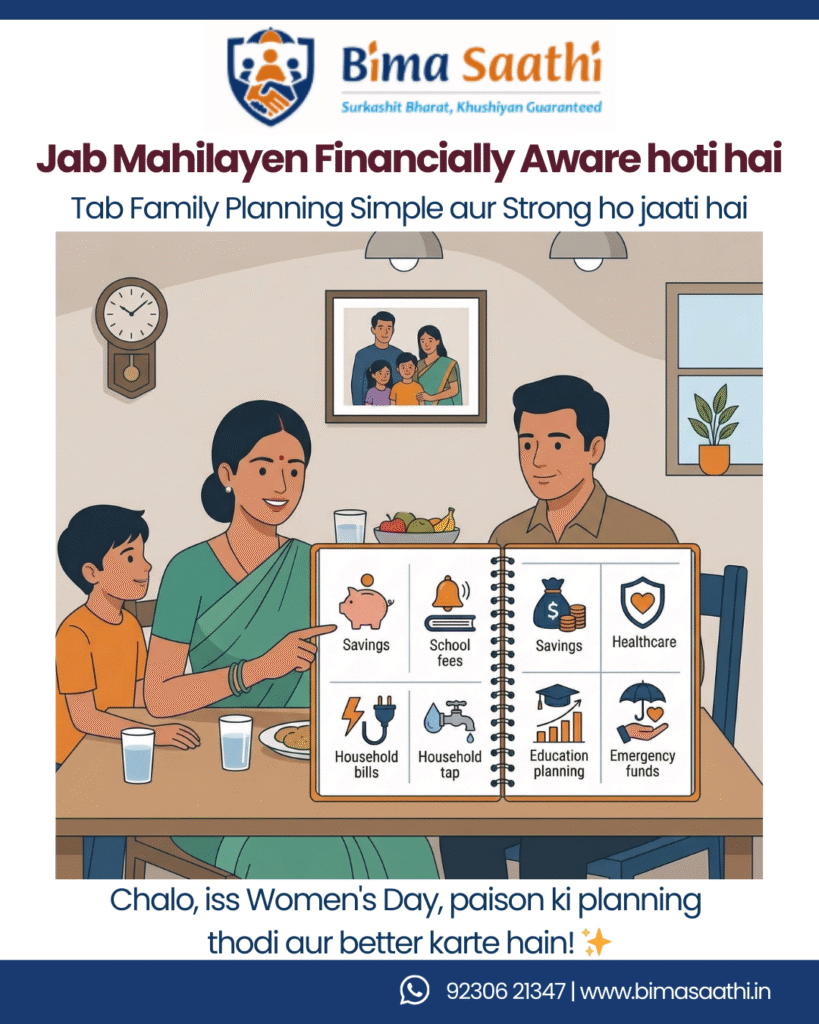
In many Indian homes, financial management doesn’t start with spreadsheets or investment apps.
It starts with a notebook on the kitchen shelf.
Monthly groceries.
Children’s school fees.
Festival spending.
Saving a little money “just in case”.
Many women quietly manage these decisions every single day.
But here’s the interesting part: when women move from managing expenses to understanding money, families begin to plan differently.
Savings become intentional.
Goals become clearer.
And financial decisions become more thoughtful.
The “Hisaab”
Let’s be honest, we’ve all seen the “Hisaab ki Diary.” Indian moms have a memory sharper than a supercomputer. They know exactly who borrowed ₹500 in 2014 and hasn’t returned it yet.
If we channel that same “Micro-management” into a Family Financial Plan, the results are powerful. Instead of just being the “CFO of the Kitchen,” she becomes the “Director of the Family’s Future.”
Why Women’s Financial Awareness Matters More Than We Think
India is changing quickly.
More women are working, managing businesses, and participating in financial decisions. But even today, there is still a gap in financial awareness.
According to the Global Financial Literacy Survey by Standard & Poor’s, only about 24% of Indian adults are financially literate, and women often have fewer opportunities to learn about financial planning.
Yet, despite this gap, women already influence most household spending decisions.
A Nielsen report estimated that women influence nearly 70–80% of household purchasing decisions globally.
So imagine the impact when women don’t just manage spending — they also understand saving, planning, and protection.
That’s when families move from reacting to problems to planning for the future.
Or in simple Hinglish:
“Financial awareness ghar ka tension kam karta hai.”
Women Are Naturally Strong Long-Term Planners
Research across the world shows something interesting.
Women tend to be more disciplined with long-term financial planning.
In Indian households, this mindset already exists.
Women often think about:
- Children’s education
- Medical needs of the family
- Saving for future responsibilities
- Avoiding unnecessary financial risks
In other words:
“Short term kharcha sab dekhte hain, lekin long-term soch aksar ghar ki women karti hain.”
From ‘Chillar’ to ‘Compound Interest’
Let’s talk about the transition from traditional saving to modern planning.
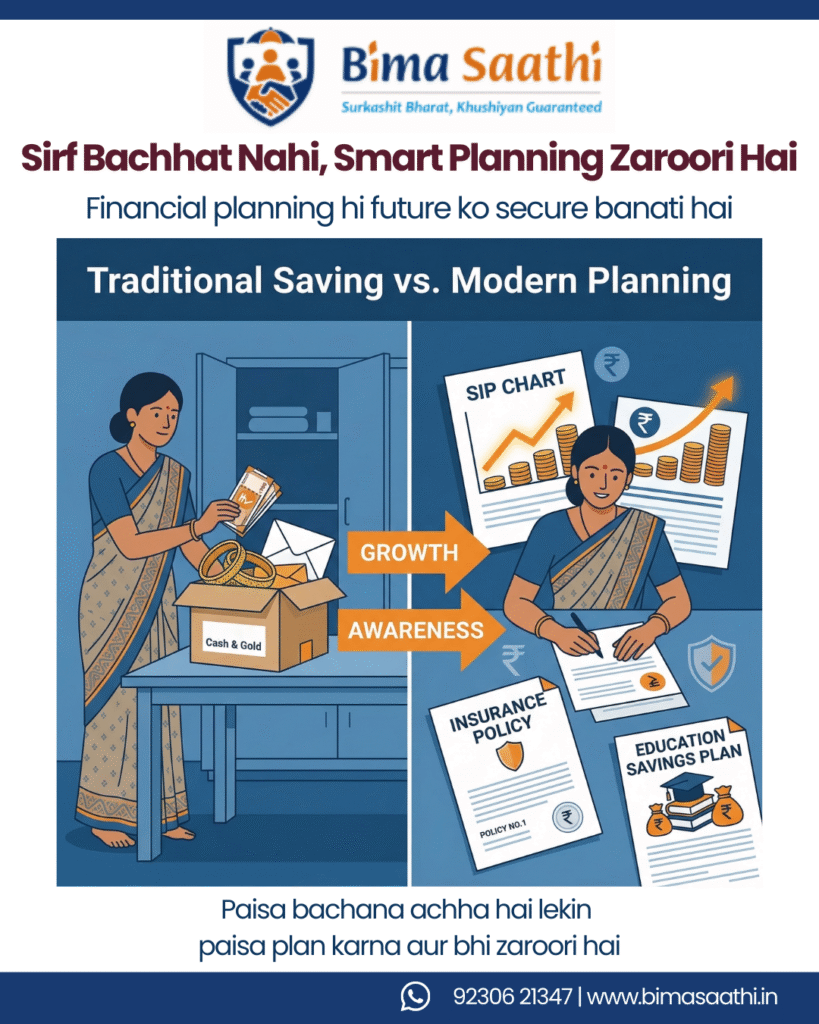
In places like Ranchi or Varanasi, gold has always been the “go-to” investment. While gold is great, it doesn’t provide the “Suraksha” (protection) that a structured financial plan does.
Example:
Imagine Suman from Patna.
She saves ₹5,000 every month in a cupboard. In 10 years, she has ₹6 Lakhs. But inflation has made that ₹6 Lakhs feel like ₹3 Lakhs.
However, if Suman had understood financial planning, she could divide that money into:
- a term insurance policy for her husband
- a small SIP for her son’s college
- health cover for elderly parents
“Ghar ki Lakshmi jab Finance Manager banti hai, tabhi ghar mein asli barkat aati hai.”
Financial Awareness Creates Stronger Families
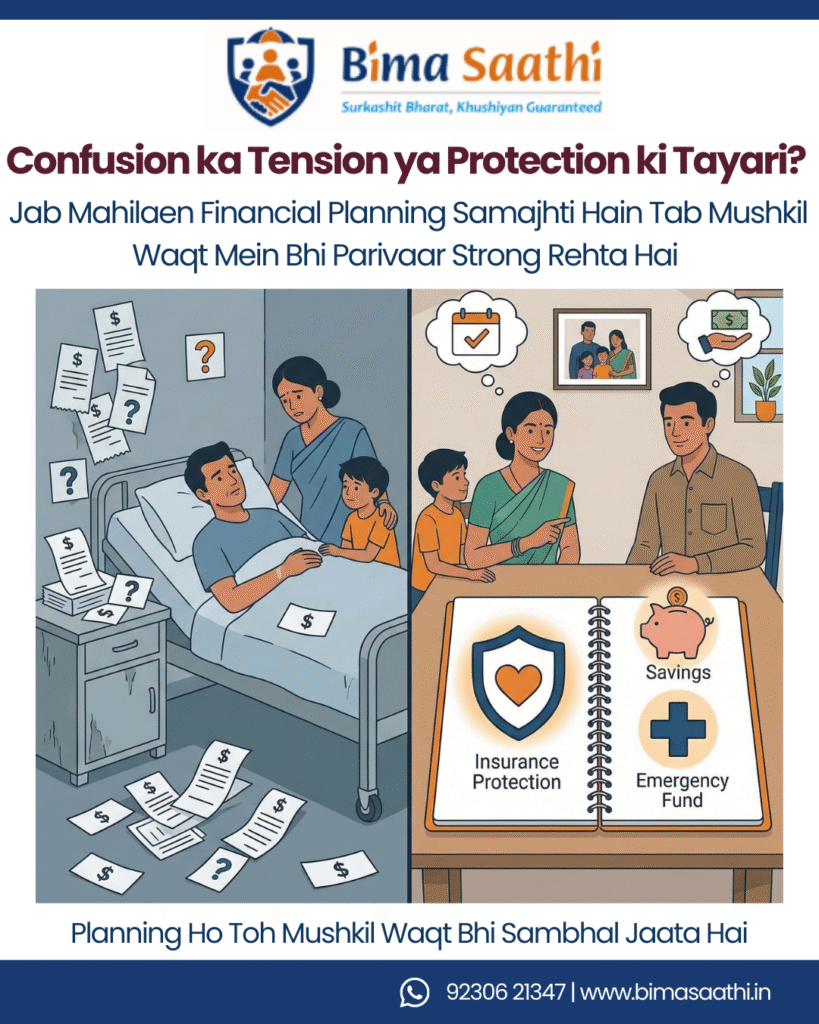
Let’s imagine two families.
Both families earn ₹50,000 per month.
Family A
Only one person handles financial decisions.
Family B
Both partners understand savings, risks, and planning.
Now consider a few situations:
| Situation | Family A | Family B |
| Medical emergency | Confusion about funds | Emergency fund ready |
| Children’s education | Planning starts late | Early saving plan |
| Unexpected job loss | Stress and panic | Backup planning |
The difference is not income.
The difference is financial awareness inside the family.
When women participate in financial discussions, planning becomes stronger.
Financial Preparedness Is No Longer Optional
India is still a country where many families face financial stress during emergencies.
According to the National Health Accounts of India, nearly 48–50% of healthcare expenses are paid directly by families out of pocket.
This means a single medical event can disrupt years of savings.
Similarly, many families are unprepared for situations like:
- Temporary loss of income
- Unexpected accidents
- Long-term health issues
When women understand financial planning, they often ask practical questions like:
“Emergency fund kitna hona chahiye?”
“Agar income ruk gayi toh kya plan hai?”
“Future ke liye kya preparation hai?”
These are not negative questions.
They are responsible questions.
Breaking the “I Am Not Good With Maths” Myth
One of the biggest barriers to financial awareness is a common belief.
Many women say:
“Mujhe maths achha nahi lagta.”
But financial awareness does not require advanced mathematics.
Most household budgeting already involves practical math.
For example:
- calculating grocery discounts
- comparing prices between shops
- managing monthly household budgets
- stretching income across multiple needs
A 2023 survey by DSP Mutual Fund found that women who actively participate in financial decisions feel around 20% more confident about their long-term financial security.
Financial awareness is not about complicated formulas.
It is about clarity and discipline.
Financial Awareness Is Spreading in Small Town India
Across Tier 2 and Tier 3 cities, financial awareness is growing steadily.
More families are discussing:
- savings
- financial protection
- education planning
- long-term stability
But many people still find financial products confusing.
This is where trusted advisors and financial guides become important.

From Homemakers to Community Financial Guides
Across many towns in eastern and northern India, an interesting trend is emerging.
Some women are choosing to become POSPs (Point of Sales Persons) or community financial advisors.
Through this role they:
- learn financial protection concepts
- guide families about insurance awareness
- help communities understand financial planning
Because they understand household realities closely, families feel comfortable asking questions.
Why the “Bima Saathi” Approach Matters
At Bima Saathi, POSP partners often notice something interesting.
When they sit down with a family:
The father looks at the premium.
The mother asks about the claim.
She naturally thinks about security.
Financial literacy for women isn’t about teaching complicated stock market jargon.
It’s about understanding essentials like:
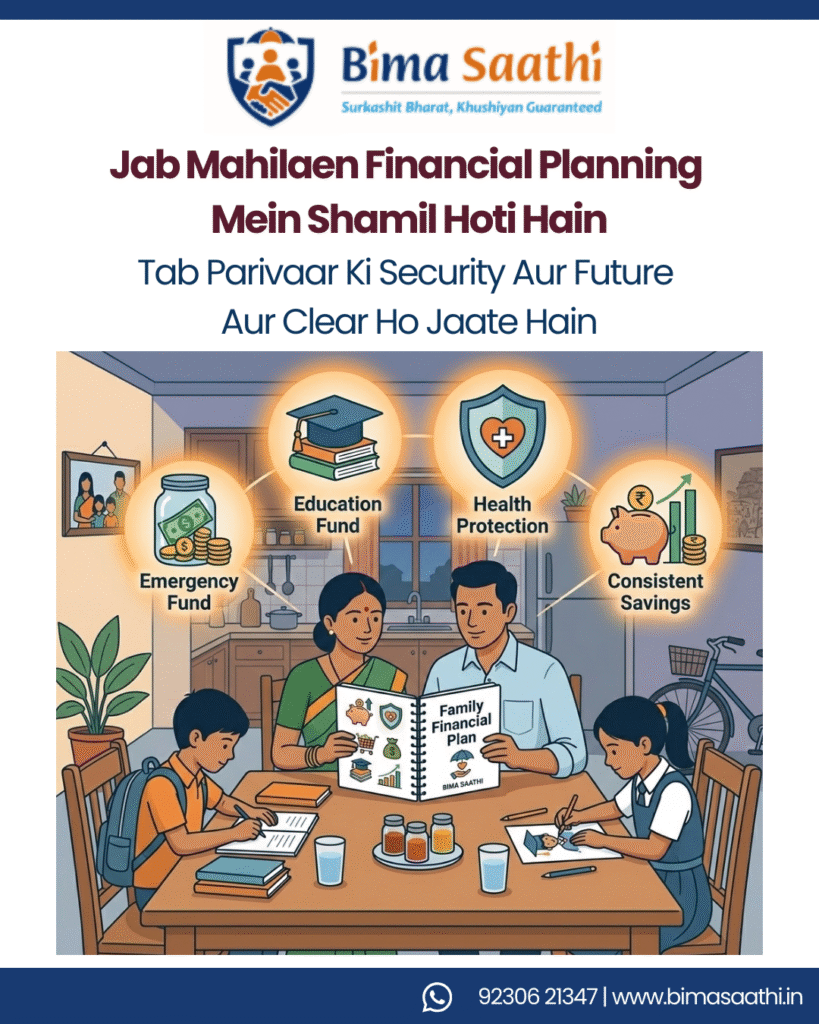
- Emergency funds (6 months of expenses)
- Health insurance protection
- Life cover for family stability
Women Often Become Financial Educators in Communities
When women understand financial planning, they start sharing knowledge.
A sister explains savings habits to her sibling.
A neighbor discusses planning with friends.
A mother shares advice with relatives.
Financial awareness spreads through conversations.
Which leads to the next idea in this series:
When Women Lead Financial Conversations, Communities Become More Financially Aware.
The Future of Financial Decisions Will Include More Women
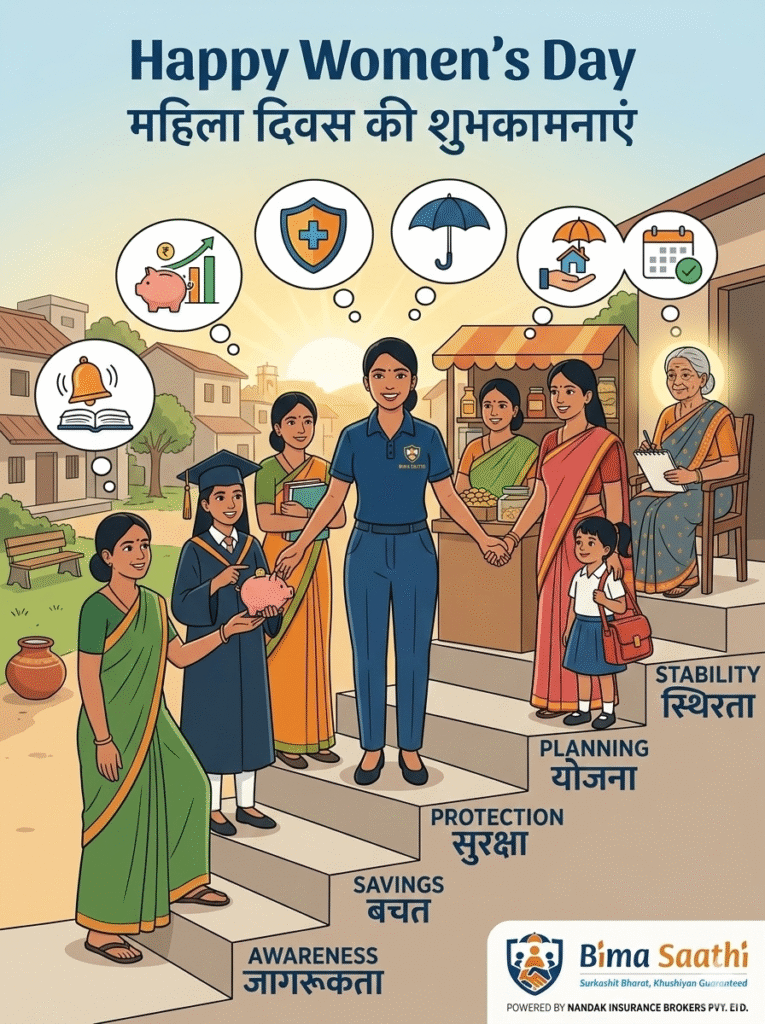
Across India, women are increasingly:
- running businesses
- contributing to household income
- managing financial responsibilities
- making long-term planning decisions
This shift will shape the future of financial planning in India.
Our final article explores this idea further:
The Future of Financial Decision-Making in India Will Include More Women.
A Simple Thought to Remember
Financial awareness does not require complicated knowledge.
It starts with simple conversations.
What are our financial goals?
Are we saving regularly?
Are we prepared for emergencies?
Sometimes all it takes is someone at home saying:
“Chalo, paison ki planning thodi better karte hain.”
Because when women understand money, families don’t just spend better.
They plan better.
Frequently Asked Questions (FAQ)
1️⃣ Why is women’s financial awareness important for families?
Women’s financial awareness helps families make better decisions about savings, education planning, healthcare preparation, and long-term financial stability.
2️⃣ How can women improve financial awareness?
Women can improve financial awareness by learning about budgeting, savings options, insurance protection, and participating in family financial discussions.
3️⃣ Do women play an important role in household financial planning?
Yes. Women often manage household budgets and spending decisions, which makes their financial awareness extremely valuable for family stability.
4️⃣ Can women build careers in financial advisory roles?
Yes. Many women become POSPs or financial advisors, helping families understand financial protection and planning options.
5️⃣ Why should families involve women in financial decisions?
Involving women in financial decisions improves planning quality, encourages disciplined saving, and strengthens long-term financial stability.
If you would like to learn more about financial awareness, protection planning, or opportunities to become a POSP, connect with BIMA SAATHI.
We believe in explaining first and guiding responsibly.
📞 Call / WhatsApp: +91 92306 21347
📧 Email: support@bimasaathi.in
🌐 Website: www.bimasaathi.in
Decision aapka hoga. Saath hum denge.

One Reply to “When Women Understand Money, Families Plan Better”
The Future of Financial Decision-Making in India Will Include More Women – Bima Saathi
[…] When women understand money, families plan better. […]